

The legendary Black Pennell: from a classic wet fly to a deadly nymph.
The Black Pennell is an absolute fly fishing legend that remains incredibly relevant even after more than a century. Created as a strict wet fly for harsh Scottish lochs, today it has successfully transitioned into a highly effective nymph. In this article, we will dive into the history of this legend, break down its proper anatomy, and show you how to tie it with your own hands.
History: Where Did the Wet Fly Come From?
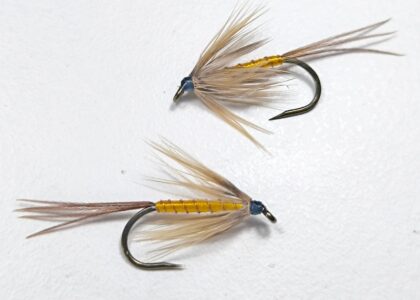
The wet fly class is one of the oldest in fly fishing. Unlike dry flies, they operate just beneath the surface film and imitate insects within the water column: drowning mayflies, egg-laying caddisflies, or pupae rising to the surface.
- Origin: Great Britain (Scotland and England).
- Era: Late 19th century, the peak of the Victorian fly fishing era.
- Philosophy: English gentlemen noticed that fish spend most of their time feeding underwater rather than on the surface. This led to the creation of laconic yet deadly silhouette-driven flies.
The Creator of the Legend
The fly was created by Henry Cholmondeley-Pennell (1837–1915), a famous English author, public servant, and avid fly fisherman. In 1885, he described it in detail in his book Fishing.Pennell was a strict proponent of minimalism. He argued that three or four universal flies with the right silhouette and color catch far more fish than hundreds of exact copies of specific insects. The Black Pennell was designed as a universal attractor, reminding fish of aquatic beetles, ants, or large chironomids (large midge pupae).
Anatomy and the Classic Wet Fly Recipe
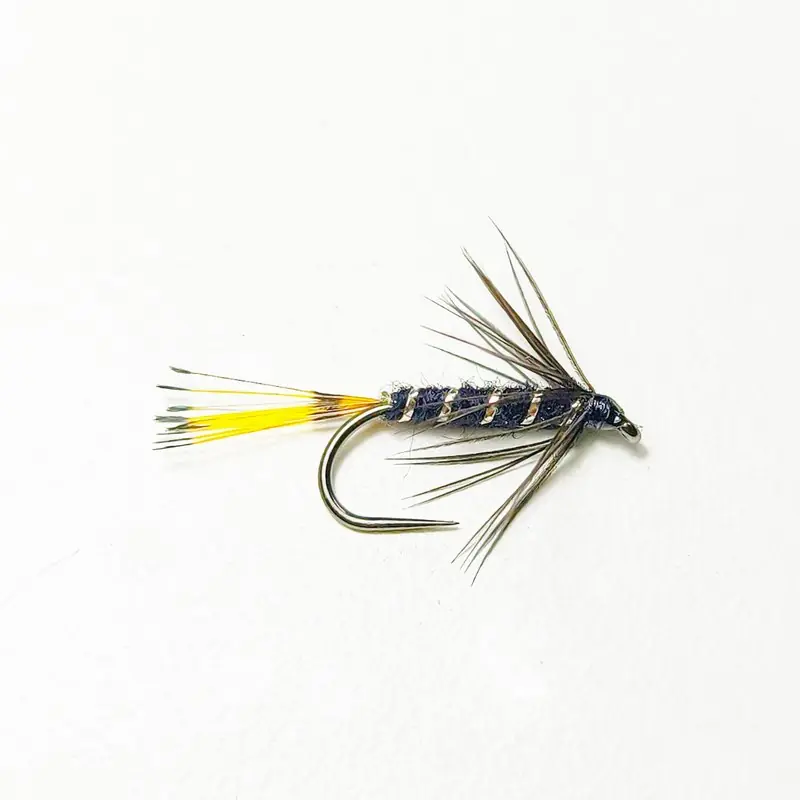
The traditional variant is tied on a heavy-wire wet fly hook, as the fly must easily pierce the water surface film and sink deep into the working column.
Classic Recipe (according to Pennell):
- Hook: Wet fly hook
- Thread: Black (14/0 or 8/0).
- Tail: Golden Pheasant crest fibers (bright yellow, curved upwards).
- Body: Black wool or rabbit fur dubbing.
- Ribbing: Flat or oval silver tinsel.
- Hackle: Black cock or hen hackle.
Evolution
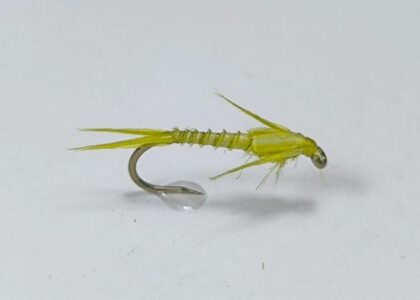
Transitioning into a Nymph Profile (Black Pennell Nymph)
The modern fly fishing school often requires deeper presentations, as fish spend up to 90% of their time feeding near the bottom. Fly tiers have adapted Pennell’s strict black-and-silver silhouette into a nymph concept.
What changed in the nymph variant?
- Added weight: A brass or tungsten bead helps the fly instantly reach the target feeding zone.
- Sparse hackle profile: It is tied with a sparse profile, or just a thorax made of ICE DUB, or another variant featuring a black hen hackle tied CDC-style to realistically imitate insect legs.
Modern Black Pennell Nymph Recipe:
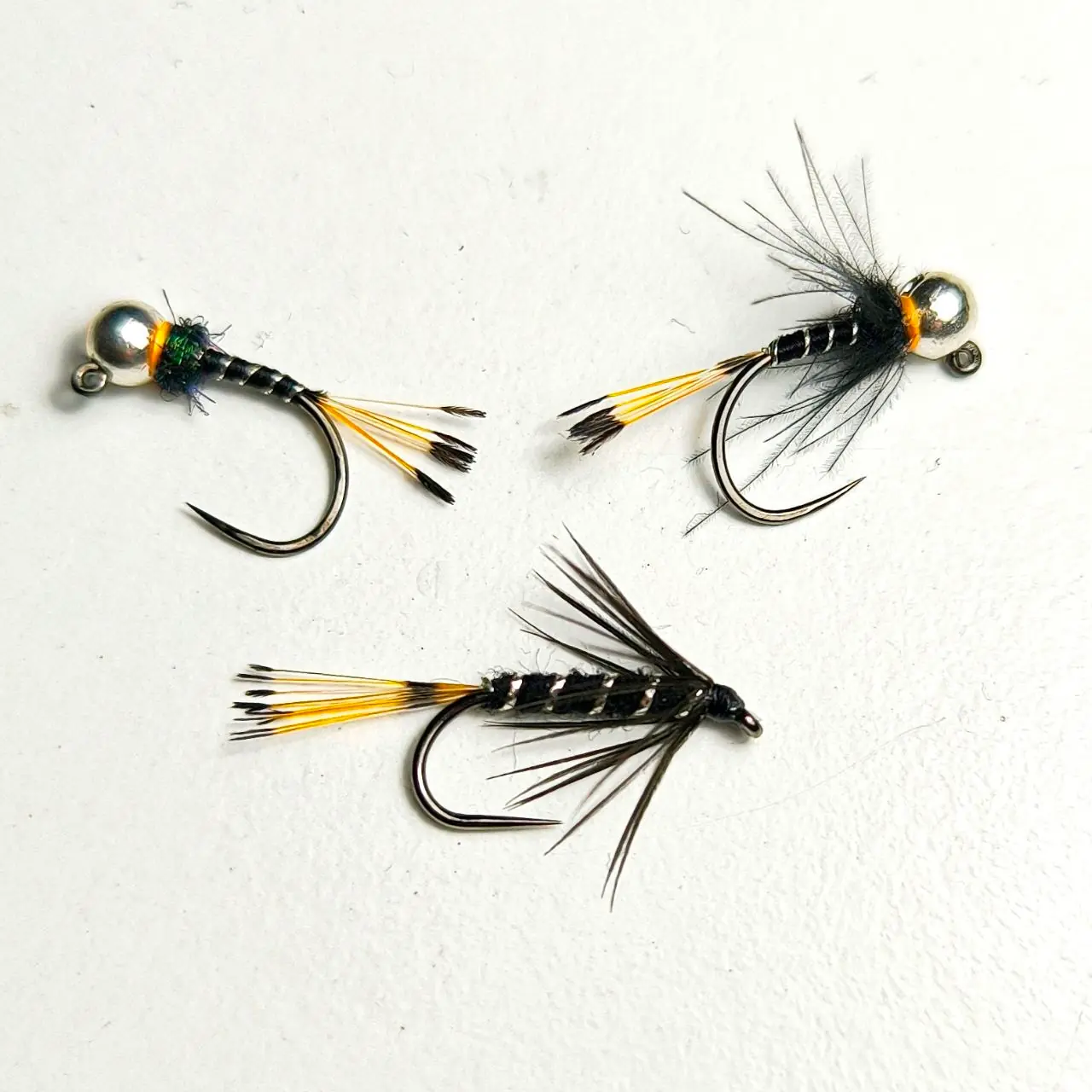
- Hook: Jig hook or standard wet fly hook, size #10–18.
- Bead: Tungsten or brass bead (silver), diameter 2.5–3.8 mm.
- Tail: A few Golden Pheasant crest fibers.
- Body: Black dubbing, wool, or silk.
- Ribbing: Fine silver wire or oval silver tinsel.
- Thorax: Slightly bulkier black dubbing, preferably ICE DUB Peacock.
- Hackle: 2–3 turns of soft black CDC or hen hackle, swept backwards towards the hook bend.
Video: Step-by-Step Tying Tutorial
Theory in fly fishing is important, but proper proportions, thread tension, and a clean whip finish are best seen once.
Tying Tip: When working with Golden Pheasant crest, ensure the tail does not roll to the side. Secure it strictly on top of the hook shank using flat, overlapping wraps of your tying thread.
Fishing Tactics: How to Present the Fly to Fish
Depending on which variant you choose, your on-the-water tactics will differ drastically.
The Wet Fly Swing
A classic method for river fishing. The cast is made down and across the current at approximately a 45-degree angle. After the fly swings down and the line tightens straight, the strike usually occurs. Also, do not forget about the dead drift. Keep your line and rod tip low in or near the water; this allows you to maintain the best control over all takes.
The French or Czech Method (Upstream Nymphing)
The cast is made straight upstream. The goal is to let the tungsten bead sink the nymph to the riverbed. The angler strips in line slack at the speed of the current, controlling the drift using a high-visibility leader or a strike indicator. This method works brilliantly for grayling, trout, and aggressive coarse fish like chub in the bottom layers of the water.



This information is so interesting!