
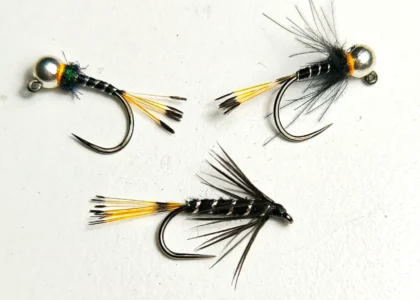
The Pheasant Tail Tungsten Nymph is one of the most effective and reliable fly patterns in modern fly fishing. Its slim profile, natural coloration, and subtle flash make it a perfect imitation of mayfly nymphs found in rivers across Europe and the USA.
This fly is designed for consistent performance in clear water and pressured conditions, where trout and grayling refuse bulky or unnatural patterns.
Fly Tying Recipe
- Hook: #10–22
- Tail: Pheasant tail fibers
- Body: Pheasant tail feather
- Rib: Copper wire
- Thorax: Peacock ice dubbing
- Hot Spot: Orange thread
- Head: Tungsten bead 2.8–3.8 mm
This combination creates a balanced fly with a natural silhouette and a slight trigger point.
The Story Behind the Pattern
The pheasant tail nymph has been a cornerstone of fly fishing for decades. This variation adds a tungsten bead for faster sinking and a hot spot for increased visibility, making it more effective in modern nymphing techniques.
The use of natural pheasant fibers gives the fly a lifelike segmentation and movement, while the peacock thorax adds a subtle flash that attracts fish without overexposing the pattern.
This version is not designed for aesthetics — it is tied for real fishing situations, where presentation and depth control matter more than appearance.
How to Fish This Nymph
This fly works best when presented close to the bottom, where trout naturally feed.
Recommended techniques:
- Euro nymphing (tight line)
- Dead drift in moderate current
- Indicator nymphing in deeper runs
Key tips:
- Maintain contact with the fly during the drift
- Use natural presentation — avoid drag
- Fish slower water seams and deeper pockets
The tungsten head allows the fly to quickly reach the strike zone, making it highly effective in early season conditions.
Why This Fly Works
The strength of this pattern comes from a combination of natural materials and controlled visibility:
- Slim body = matches natural insects
- Copper rib = durability + segmentation
- Peacock thorax = subtle attraction
- Orange hot spot = trigger point for strikes
This balance makes the fly effective in both clear and slightly colored water.
Watch the Full Tying Process
You can see the full step-by-step tying process on YouTube:
Conclusion
The Pheasant Tail Tungsten Nymph remains one of the most versatile flies in any fly box. Whether you fish small streams or larger rivers, this pattern consistently produces results.
It is simple, natural, and proven — exactly what effective fly fishing requires.



Свежие комментарии