

The Sillen Salmon Fly: A Legacy of Scandinavian Precision
In the world of Atlantic salmon fishing, few patterns command as much respect as the Sillen. This fly isn’t just a collection of fur and feathers; it’s a strategic tool developed for the demanding conditions of Northern Europe. As an EFFA and AAPGAI certified instructor, I’ve seen this pattern turn a “blank” day into a legendary one on rivers ranging from the Kola Peninsula to the majestic banks of the Norwegian Alta.
Why the Sillen Pattern Still Dominates Northern Rivers
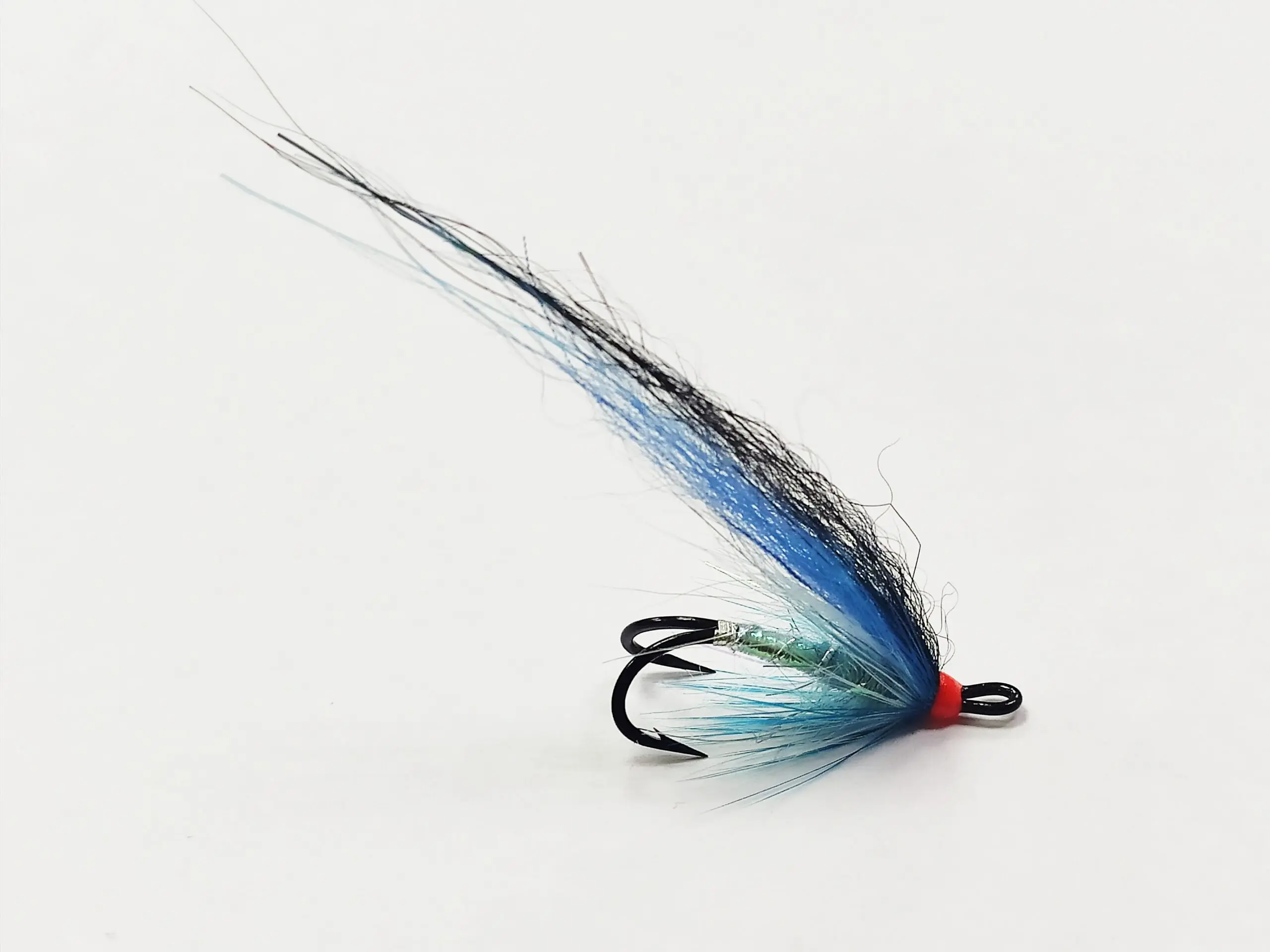
The endurance of the Sillen lies in its perfect chromatic balance. While modern fly tying often leans towards overly complex “shrimp” patterns, the Sillen adheres to the classic principle of contrast. The sharp silver body combined with the deep blue and black wing creates a silhouette that remains visible even in heavy glacial silt or under the fading light of the midnight sun.
The Physics of the “Swing” and Fly Design
When we talk about salmon fishing, we talk about the “swing.” A fly must swim, not just float. The Sillen is specifically weighted and tapered to maintain a horizontal profile as it cross-cuts the current. This ensures that the hook point is always presented at the optimal angle for a secure take in the corner of the salmon’s jaw.
Expert Material Breakdown: The Secret of Arctic Fox
One of the most common mistakes in commercial fly tying is the use of synthetic substitutes for the wing. At FisherFun, I strictly adhere to traditional natural materials for several technical reasons:
- Dynamic Pulse: Arctic Fox hair has a natural hollow structure. In the water, it pulses with every micro-turbulence, making the fly look alive even when your line is static.
- Translucency: Unlike dyed nylon, natural hair allows light to pass through, mimicking the shimmering scales of a distressed baitfish.
- Durability: High-grade fox hair stands up to the corrosive nature of cold, fast-flowing water without losing its shape.
🛒 Professional Grade Sillen Flies
Don’t trust your once-in-a-lifetime trip to mass-produced flies. I hand-tie every Sillen available in our shop to the exact standards I use in international competitions.
Order Your Hand-Tied Sillen HereTactical Guide: How to Fish the Sillen in Different Conditions
Success with the Sillen depends on adapting your presentation to the river’s mood. Here is my instructor-level breakdown:
1. Early Season (Cold & High Water)
In these conditions, salmon are hugging the bottom to conserve energy. I recommend using the Sillen on a 1-inch or 1.5-inch copper tube. Use a heavy sinking tip (Sink 3 or Sink 5) and a short leader to ensure the fly reaches the “strike zone” quickly.
2. Summer Lows (Clear & Bright)
When the sun is high and the water is gin-clear, size down. A Sillen tied on a #8 or #10 double hook is incredibly effective. Focus on a faster swing by mending your line downstream to increase the fly’s speed and trigger a “reflex” strike.
Frequently Asked Questions (FAQ)
A: While primarily a salmon fly, the blue/silver contrast is a known “magnet” for large Sea Trout in the evening light.
A: For most European rivers, a size #6 is the universal choice for the Sillen.
Conclusion: A Tradition You Can Trust
Fishing a Sillen is a nod to the history of our sport. It connects the modern angler to the legends of the past. When you tie on a Sillen from FisherFun, you aren’t just using a fly; you are utilizing years of competitive expertise and a deep passion for the craft of fly tying.



Свежие комментарии